
Technical Show Jumping Jackets: 4-Way Stretch Softshell Hydrophobic Coatings, Breathability & Ring Etiquette
Apparel engineering for competitive equestrian show jackets: 280 GSM 4-way stretch bonded softshell, DWR water-repellent finishing, breathable mesh back panels, and FEI ring tailoring.
On this page (10)
- Technical Show Jumping Jackets: 4-Way Stretch Softshell Hydrophobic Coatings, Breathability & Ring Etiquette
- Executive Overview and B2B Procurement Context
- Core Jacket Construction
- Pattern Engineering for Show Jumping
- Technical Specification Comparison
- Material and Component Engineering
- FEI Show Jumping Dress Code and Ring Etiquette
- Sialkot Manufacturing, Quality Control and Inspection Checkpoints
- Buyer RFQ and OEM Ordering Checklist
- Procurement Recommendation
Technical Show Jumping Jackets: 4-Way Stretch Softshell Hydrophobic Coatings, Breathability & Ring Etiquette
Executive Overview and B2B Procurement Context
A technical show jumping jacket must present a disciplined competition silhouette while allowing the rider to maintain a stable upper-body position over fences. The specification is therefore a performance garment rather than a conventional fashion blazer. For distributors, professional riders, farriers, equine veterinary hospitals, riding schools, and national-level competition teams, the critical purchasing variables are fabric recovery, moisture transfer, quiet movement, shoulder mobility, closure reliability, dimensional consistency, and compliance with the current event regulations of the relevant governing body.
Equestrian Max manufactures OEM and ODM riding apparel in Sialkot around a defined construction: a 78% polyamide / 22% elastane 4-way stretch outer fabric, laminated to a micro-mesh breathable lining with a target moisture-vapour transmission performance of 10,000 g/m²/24h. The shell receives a fluorocarbon-free Durable Water Repellent treatment to shed light rain, arena spray, and incidental stable moisture without being represented as a waterproof membrane.
For a distributor, this specification creates a repeatable product position between a rigid traditional competition coat and a lightweight training top. For professional riders, the unrestrictive shoulder gusset and elastane recovery reduce interference during the approach, take-off, and landing phases. For farriers and equine veterinary hospitals, the same garment architecture is useful where staff require a tailored appearance, frequent movement, and resistance to light contamination during demonstrations, client consultations, or competition support.
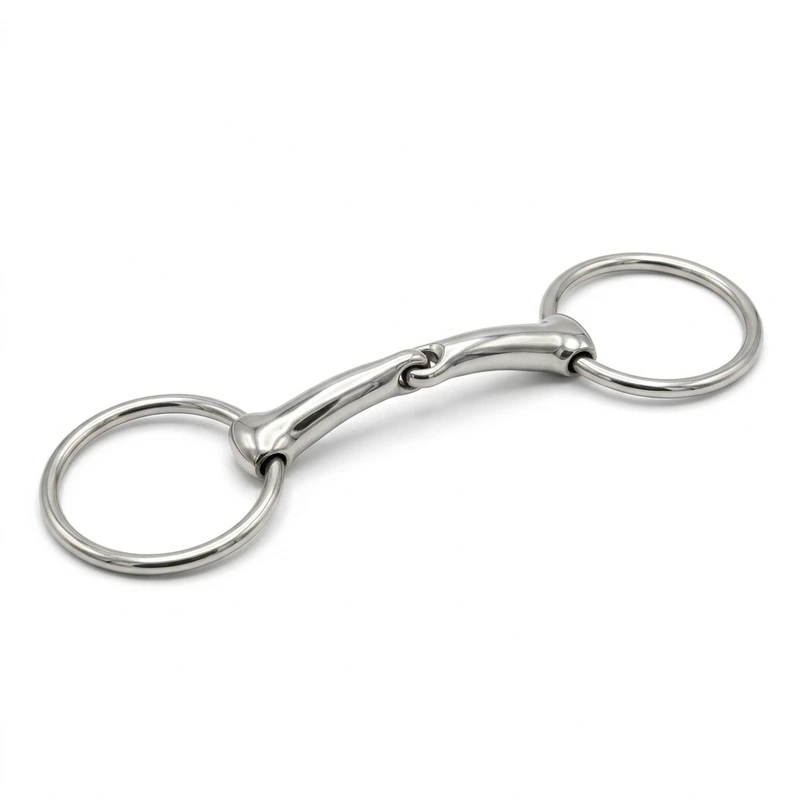
Product ranges can be reviewed through the Equestrian Max products portfolio, with related equipment available in English saddles and saddlery, horse bits and bridles, farrier and hoof-care tools, and equine dental instruments.
Core Jacket Construction
4-Way Stretch Softshell Outer
The outer fabric uses a nominal blend of 78% polyamide and 22% elastane. Polyamide supplies abrasion resistance, dimensional stability, and a smooth tailored face; elastane supplies extension and controlled recovery in both the wale and course directions. The fabric should be specified by finished-garment performance rather than fibre percentage alone.
- Composition: 78% polyamide / 22% elastane by mass, with a procurement tolerance of ±2 percentage points on each fibre fraction unless a customer-approved laboratory tolerance is agreed.
- Stretch direction: minimum 35% extension in both principal directions after conditioning, with a target recovery of at least 90% after 30 minutes and 95% after 60 minutes under the agreed laboratory method.
- Fabric mass: typically 220–300 g/m² for a competition softshell; the final value must be frozen on the approved pre-production sample because mass affects drape, heat retention, and grading.
- Face appearance: low-lustre tailored finish, even dye penetration, no barre, needle lines, elastane streaking, or visible shade bands.
- Dimensional stability: target finished-garment shrinkage not exceeding 3% in length or width after the agreed laundering cycle.
For a riding coat, elongation must not be treated as a simple comfort metric. Excessive stretch without recovery can cause lapel distortion, sleeve length migration, button misalignment, and progressive bagging across the lower back. The elastane yarn, knitting density, lamination adhesive, and pressing temperature must therefore be controlled together.
Micro-Mesh Lining and Moisture Transfer
The lining is a low-bulk micro-mesh selected to preserve airflow while preventing the outer elastane fabric from clinging to the base layer. The requested breathability rating is 10,000 g/m²/24h, stated as moisture-vapour transmission. The test method must be named on the technical file because ASTM E96, JIS L 1099, and ISO 15496 can produce different numerical results.
- Target MVTR: 10,000 g/m²/24h minimum on the approved laminate under the declared test method.
- Air permeability: establish a buyer-specific minimum, commonly 30–80 L/m²/s at 100 Pa for an open micro-mesh lining, because excessive air permeability can reduce wind protection.
- Mesh stability: no laddering, fraying, or seam separation after the agreed wash and abrasion cycle.
- Skin-side feel: smooth, non-abrasive contact at the collar, armhole, cuff, and side seam; exposed seam allowances should not create pressure points under a base layer.
The jacket should be described as breathable and water-repellent, not fully waterproof, unless a separate waterproof membrane, hydrostatic-head specification, and seam-sealing process are approved. A DWR treatment limits wetting of the face fabric; it does not replace a membrane or taped seam system.
Fluorocarbon-Free DWR Surface Treatment
The surface treatment is a fluorocarbon-free DWR system designed to increase initial water beading while maintaining the hand, colour, and stretch of the laminated fabric. The treatment must be compatible with elastane and the adhesive layer. The finish should not create a brittle face, excessive odour, shade change, or reduction in recovery.
- Spray rating: target ISO 4920 or AATCC 22 rating of 80 or higher before laundering, with a commercially agreed retained rating after five and ten wash cycles.
- Hydrostatic resistance: measure separately under ISO 811 if a rain-resistance claim is required; DWR alone must not be marketed as a waterproof barrier.
- Fluorine status: fluorocarbon-free chemistry supported by the supplier declaration and restricted-substance documentation; require total organic fluorine or the buyer’s specified PFAS screening where applicable.
- Compatibility: no visible change in shade greater than the buyer’s agreed grey-scale tolerance and no measurable loss of stretch recovery after finishing.
Pattern Engineering for Show Jumping
Shoulder Gusset and Armscye Mobility
The shoulder construction should use an unrestrictive gusset or shaped armscye that allows the rider to close the hip angle and follow the horse’s neck without the jacket pulling across the scapular region. A conventional low armscye may look tailored on a static mannequin but can restrict forward reach when the rider shortens the reins or adopts a two-point position.
- Armscye position: sufficiently high and anatomically shaped to reduce lateral pulling during rein contact.
- Gusset geometry: use a curved or diamond-shaped insert with balanced stretch direction; avoid placing a high-tension seam directly over the posterior shoulder blade.
- Sleeve pitch: pattern the sleeve in a natural riding position rather than a relaxed standing position.
- Cuff clearance: allow adequate extension for gloves without exposing the wrist during a forward riding posture.
- Back balance: include sufficient centre-back length for coverage in the saddle while preventing excess fabric from contacting the cantle.
Pattern approval should be performed on a moving rider and, where possible, in the intended competition posture. A static fitting session alone will not identify sleeve torque, collar lift, or back hem displacement over a fence.
Concealed YKK Front Closure
The centre-front closure uses a concealed YKK zipper behind tailored matte buttons. The zipper provides the primary load-bearing closure and the buttons preserve the appearance of a conventional competition coat. The placket must be engineered so the buttons do not carry the full opening force during mounting, riding, or arm extension.
- Zipper: genuine YKK coil or moulded-tooth specification selected against the finished fabric weight, with matched slider, tape colour, and puller dimensions.
- Placket: stable fusible or knitted support layer with no bubbling after pressing or laundering.
- Button finish: matte, low-reflection surface suitable for arena photography and show presentation.
- Button security: lockstitch or shank construction tested for pull-off resistance under the buyer’s agreed apparel method.
- Top closure: collar and upper placket must lie flat without throat pressure when the rider looks downward or shortens the reins.
Technical Specification Comparison
| Jacket Element | Required Construction | Target Performance | Verification Method | Commercial Risk if Uncontrolled |
|---|---|---|---|---|
| Outer shell | 78% polyamide / 22% elastane 4-way stretch softshell | 35% minimum extension in both directions; 90% recovery at 30 minutes | Declared stretch and recovery method after conditioning | Bagging, lapel distortion, inconsistent sizing |
| Micro-mesh lining | Breathable, low-bulk knitted mesh laminated to shell | MVTR 10,000 g/m²/24h minimum | ISO 15496, ASTM E96, or JIS L 1099 with method stated | Heat accumulation, clammy hand feel, poor rider acceptance |
| DWR finish | Fluorocarbon-free water-repellent treatment | ISO 4920 or AATCC 22 spray rating 80 or higher before washing | Spray test, wash-retention test, chemical declaration | Premature wetting, shade change, restricted claims |
| Front closure | Concealed YKK zipper behind tailored matte buttons | Smooth operation through full placket; no exposed coil or tape | Manual cycle test, visual inspection, pull-off test | Jamming, placket rippling, presentation failure |
| Shoulder system | Unrestrictive gusset armscye and riding-position sleeve pitch | Full forward reach without collar lift or seam binding | Live rider fit test and pattern measurement audit | Rein interference, reduced mobility, rider fatigue |
| Seam construction | Lockstitched tailored seams with reinforced high-load points | Consistent SPI, no skipped stitches or seam slippage | Inline visual inspection and seam-strength sampling | Armhole opening, lining separation, warranty returns |
| Dimensional stability | Controlled cutting, lamination, pressing, and laundering process | Finished length and width change not exceeding 3% | Pre- and post-wash measurement chart | Wholesale size claims become unreliable |
Material and Component Engineering
Thread, Seam and Lamination Controls
Thread size must be balanced against the shell thickness and seam geometry. A thread that is too fine can fail at the armhole and pocket opening; a thread that is too heavy can pucker the stretch fabric and create a hard ridge under the lining. The factory should record needle size, thread ticket, stitch density, seam allowance, and machine tension for every approved style.
- Stitch density: commonly 10–14 stitches per 25 mm for tailored shell seams, adjusted after seam-pucker testing.
- Seam allowance: freeze by pattern block, with a normal production tolerance of ±2 mm unless the area is a critical closure or armscye junction.
- Laminate adhesive: continuous and even enough to prevent bubbling, but not so heavy that it blocks the micro-mesh or reduces stretch.
- Pressing: use controlled temperature, dwell time, and pressure; excessive heat can relax elastane and alter the face sheen.
- Reinforcement: stabilize pocket mouths, zipper ends, button positions, and gusset junctions without creating rigid plates that restrict motion.
Metal Hardware and Adjacent Equestrian Product Standards
Buttons, zipper components, and decorative hardware should be specified by base metal, plating, nickel release, corrosion resistance, and surface hardness rather than by appearance alone. Where a customer requests premium Argentan or high-copper German Silver hardware for coordinated equestrian collections, the alloy must be identified by mill certificate. A representative high-copper German Silver formulation may be approximately 60–65% copper, 15–25% nickel, and 10–20% zinc; the exact grade must be approved because “German Silver” is a trade description rather than a single universal alloy.
For adjacent tack and equine veterinary tool programmes, Equestrian Max can separately specify AISI 420 stainless steel with approximately 12–14% chromium and 0.15–0.40% carbon, or Chrome Vanadium drop-forged steel with the customer’s required carbon, chromium, and vanadium ranges. These metals are relevant to bits, buckles, farrier tools, and equine dental instruments, but they should not be substituted into a lightweight jacket closure without a weight, corrosion, and skin-contact review.
Leather-coordinated apparel accessories should use traceable vegetal drum-dyed Argentine cowhide where specified. A typical technical brief may require 1.2–1.6 mm finished thickness, thickness tolerance of ±0.15 mm, moisture content of 12–18%, pH of 3.5–5.5, and colour fastness appropriate to dry and wet rubbing. Those figures belong in the leather accessory specification and must not be assumed for the textile jacket itself.
FEI Show Jumping Dress Code and Ring Etiquette
Competition attire must be checked against the current FEI Jumping Rules, FEI General Regulations, event schedule, and any national federation requirements in force at the venue. Rules can change by season and category, so the manufacturer should avoid printing an absolute “FEI approved” claim unless the customer has verified the specific event requirements.
- Competition jacket: a conservative, tailored riding jacket is normally expected in recognised show jumping competition, subject to the applicable rules and steward instructions.
- Colour and decoration: subdued colours and restrained branding are commercially safer than highly reflective panels, oversized logos, or decorative hardware that may conflict with event presentation standards.
- Weather provisions: extreme-weather permissions may allow alternative garments or jackets under the applicable regulations. Riders should follow the official steward’s instruction rather than relying on a product description.
- Safety equipment: the jacket does not replace a correctly fitted protective helmet or other mandatory equipment. Helmet and boot requirements must be checked separately under the current discipline rules.
- National and venue rules: British Equestrian, national federations, and individual show schedules may impose additional requirements, particularly for colours, logos, sponsorship, and permitted outerwear.
Ring etiquette is practical as well as visual. The jacket should be clean, correctly fastened, free from loose threads, and fitted so that the rider can maintain an independent hand and balanced seat. A rider should not enter the arena with an open front, hanging zipper pull, unsecured button, visibly wet or heavily soiled garment, or loose accessory likely to distract the horse or officials. The garment should remain quiet during rein movement and should not produce abrasive noise against the saddle, breastplate, or reins.
Sialkot Manufacturing, Quality Control and Inspection Checkpoints
Incoming Material Inspection
- Verify polyamide and elastane composition against the supplier certificate and an independent fibre-composition check where required.
- Record fabric roll width, mass per unit area, shade, stretch, recovery, GSM variation, and visible defects before spreading.
- Inspect the lining for mesh distortion, holes, contamination, and incompatible surface finishes.
- Review DWR chemistry declarations, fluorocarbon-free documentation, restricted-substance records, and batch identification.
- Check YKK zipper model, length, tape colour, slider action, and puller specification against the approved bill of materials.
Cutting and Lamination Inspection
- Use a digitised pattern marker with grain, stretch direction, notches, and gusset orientation clearly identified.
- Audit cut-panel dimensions against the graded pattern, with critical points such as chest, waist, sleeve length, centre back, and armscye commonly controlled to ±3 mm on individual panels.
- Maintain colour-lot segregation between shell, lining, buttons, zipper tape, and thread.
- Inspect laminated panels for bubbling, adhesive strike-through, delamination, and loss of recovery after pressing.
Sewing and Inline Inspection
- Check stitch density, seam allowance, thread tension, skipped stitches, open seams, puckering, and needle damage at defined hourly intervals.
- Measure the centre-front placket to confirm that the concealed zipper remains straight behind the matte buttons.
- Inspect the shoulder gusset for correct orientation and smooth transition into the armscye and sleeve head.
- Apply pull testing or approved manual loading checks at button, pocket, zipper-end, and high-stress seam locations.
- Remove loose threads and confirm that no sharp hardware edge contacts the rider-side lining.
Final Laboratory and Garment Audit
Pre-shipment approval should include a dimensional audit after pressing, visual shade grading under controlled lighting, zipper-cycle sampling, button security checks, laundering verification, DWR spray testing, and a live rider fitting. For wholesale programmes, the buyer should approve a sealed golden sample and a measurement tolerance chart before bulk cutting.
Recommended acceptance controls include an AQL plan agreed in the purchase order, 100% visual inspection of front closure, collar, lapel, sleeve, and logo placement, and independent testing for any regulatory or chemical claim used in the catalogue. A jacket that passes laboratory testing but fails rider movement evaluation is not technically complete.
Buyer RFQ and OEM Ordering Checklist
- Product identity: technical show jumping jacket, intended competition level, rider segment, and target season.
- Fabric composition: 78% polyamide / 22% elastane, declared tolerance, target GSM, face finish, stretch direction, and recovery requirement.
- Lining: micro-mesh construction, colour, hand feel, anti-static requirement if applicable, and MVTR target of 10,000 g/m²/24h.
- Test method: specify ISO, ASTM, AATCC, or JIS method for MVTR, spray rating, shrinkage, colour fastness, abrasion, and seam strength.
- DWR: fluorocarbon-free requirement, initial spray rating, wash-retention target, chemical documentation, and whether hydrostatic resistance is required.
- Closure: YKK zipper family, finished length, slider and puller style, concealed-placket construction, matte button material, size, and colour.
- Pattern: size range, grading rule, centre-back length, sleeve pitch, armscye construction, gusset dimensions, and riding-position fit approval process.
- Branding: embroidery or print location, maximum logo dimensions, thread specification, sponsorship restrictions, and colour references.
- Measurements: complete point-of-measure chart, production tolerances, shrinkage allowance, and approved measurement sample.
- Quality: AQL level, inspection agency if applicable, defect classification, packing standard, carton marking, and replacement policy.
- Compliance: restricted-substance requirements, fibre declaration, country-of-origin marking, care label language, and market-specific labelling.
- Commercial terms: minimum order quantity, sample charges, size ratio, colourway quantity, lead time, payment terms, and spare-material policy.
Procurement Recommendation
For a reliable wholesale programme, approve the fabric laminate, DWR chemistry, YKK closure, gusset pattern, and measurement chart before bulk production. The commercial sample should be tested both on the laboratory bench and on a mounted rider performing rein shortening, two-point position, landing recovery, and normal ring movement. This combined approach protects presentation quality without sacrificing the biomechanical freedom required in show jumping.
To discuss private-label jackets, coordinated riding collections, or wider equestrian equipment sourcing, review the products portfolio and contact the Equestrian Max manufacturing team through the OEM and ODM enquiry page.
Related Categories & Sourcing Hubs
Ustad Rashid Mahmood
Master English Saddlery & Vegetal Leather Tree Architect
Reviewed against FEI tack regulations, high-copper German Silver bit metallurgy, Chrome-Vanadium farrier forging, and equine dental standards.

