B2B Sourcing Guide for Wholesale Tack Shops: Minimum Order Quantities, Private Label Stamping & Export Packing from Sialkot
A master commercial procurement guide for equestrian retailers, distributors, and academies importing directly from Sialkot manufacturing workshops.
On this page (15)
- B2B Sourcing Guide for Wholesale Tack Shops: Minimum Order Quantities, Private Label Stamping & Export Packing from Sialkot
- Executive Overview and B2B Procurement Context
- 1. Direct Factory Sourcing from Sialkot
- 2. Leather Engineering for English Saddlery
- 3. Metal Engineering and Metallurgical Requirements
- 4. Technical Comparison of Common OEM Material and Shipping Options
- 5. Private-Label Stamping and CNC Brand Debossing
- 6. MOQ Tiers for Mixed Containerload Orders
- 7. Manufacturing, Quality Control, and Inspection Checkpoints in Sialkot
- 8. VCI Moisture-Barrier Export Packing
- 9. FOB Karachi versus DHL Express Air Courier
- 10. Secure Trade Finance and Payment Terms
- 11. Buyer RFQ and Ordering Checklist
- 12. Recommended Sourcing Sequence
- 13. Work with Equestrian Max
B2B Sourcing Guide for Wholesale Tack Shops: Minimum Order Quantities, Private Label Stamping & Export Packing from Sialkot
Executive Overview and B2B Procurement Context
Direct factory sourcing from Sialkot can give tack distributors, professional riders, farriers, equine veterinary hospitals, and private-label retailers control over material grade, dimensions, branding, packaging, and landed cost. The commercial advantage is achieved only when the purchase specification is technically precise. A quotation stating “premium leather bridle” or “stainless-steel hoof tool” is insufficient for repeatable OEM production.
Equestrian Max coordinates leatherwork, metal component production, saddlery assembly, farrier-tool manufacture, and equine dental instrument production through controlled factory processes in Sialkot, Pakistan. A properly structured order should define hide origin and thickness, tanning chemistry, metal alloy, hardness, surface finish, working dimensions, stitching, logo execution, inspection standard, packing method, shipping term, and payment security.
This specification is particularly important for:
- Tack distributors: requiring consistent sizing, barcode-ready packing, stable replenishment quantities, and documented private-label construction.
- Professional riders and yards: requiring correct anatomical fit, controlled leather flex, smooth bit surfaces, reliable stitching, and consistent adjustment holes.
- Farriers: requiring balanced tools, secure handles, wear-resistant working edges, and corrosion control during international storage.
- Equine veterinary hospitals: requiring traceable material grades, cleanable surfaces, dimensional repeatability, and suitable packaging for equine dental and examination instruments.
- Branded retailers: requiring controlled logo placement, repeatable colour matching, retail cartons, care instructions, and an approved golden sample.
Product families can be reviewed through the Equestrian Max product range, including English saddles and saddlery, horse bits and bridles, farrier and hoof-care tools, and equine dental instruments.
1. Direct Factory Sourcing from Sialkot
Factory capability assessment
A credible OEM supplier should be able to identify the production location for each operation rather than presenting every component as factory-made. A complete manufacturing map may include hide selection and cutting, drum dyeing, edge finishing, bridle assembly, brass or steel component machining, hot or cold forging, CNC branding, hand polishing, final inspection, and export packing.
Before placing a production order, request the following evidence:
- Registered company and export documentation, including the legal manufacturing or trading entity shown on the pro forma invoice.
- Photographs or video of cutting, sewing, metal finishing, stamping, inspection, and packing areas.
- Current quality-management certificates where applicable, with certificate scope, issuing body, validity dates, and site address verified independently.
- Leather tannery details, hide origin, tanning process, chemical-restricted-substance declarations, and recent laboratory test reports.
- Metal mill certificates or laboratory reports identifying alloy chemistry, hardness, tensile properties where relevant, and corrosion-test results.
- Reference samples from the same process route that will be used for the production order.
- Written confirmation of subcontracted operations, especially forging, plating, heat treatment, leather tanning, and laser or CNC engraving.
Certifications must not be treated as a substitute for a product inspection. A tannery certificate may confirm environmental or management practices without proving that a particular lot of Argentine cowhide meets the required thickness, tear strength, colour fastness, or restricted-substance limits. The buyer should match every certificate to the specific product and production lot.
2. Leather Engineering for English Saddlery
Vegetal drum-dyed Argentine cowhide specification
For premium bridles, reins, breastplates, martingales, girths, and selected saddle components, Equestrian Max can specify vegetal drum-dyed Argentine cowhide. The commercial specification should identify whether the material is full-grain, corrected-grain, split, or laminated. Full-grain leather retains the stronger outer grain structure; a split or heavily corrected leather must not be described as equivalent.
A practical OEM specification for vegetable-tanned cowhide may include:
- Hide type: Argentine cowhide, full-grain where the design requires structural strength and controlled flex.
- Tanning route: vegetable tanning with drum dyeing or drum retannage, followed by controlled fatliquoring and finishing.
- Nominal thickness: 2.8 to 3.5 mm for substantial bridle cheeks, breastplates, and reins; 1.8 to 2.4 mm for lighter straps and keeper components; final tolerance typically ±0.15 mm unless the drawing states otherwise.
- Moisture content: normally 12% to 18% by mass at dispatch, measured by an agreed laboratory or moisture-meter method. Excessively dry leather is more vulnerable to edge cracking and excessive stiffness.
- pH: typically 3.5 to 5.5 for finished leather, with a buyer-specific limit established for the product and lining combination.
- Tensile strength: a project target of at least 15 MPa for structural strap leather, subject to hide grade, direction of cut, and applicable leather test method.
- Tear strength: a project target of at least 35 N for strap sections, with higher values specified for reins, girths, and load-bearing billets.
- Flex resistance: no visible grain cracking after an agreed flex cycle test, commonly 20,000 to 50,000 flexes for finished strap samples depending on the intended product.
- Colour fastness: dry and wet rub performance should be agreed before production. A practical private-label target is a minimum grey-scale rating of 4 for dry rubbing and 3 to 4 for wet rubbing, subject to colour and finish.
- Finish and edge: edges skived, rounded, burnished or painted according to the approved sample, without loose fibres, exposed split layers, or sharp transitions that can rub the horse.
Leather strength varies with hide location and cutting direction. Shoulder and belly zones should not be mixed into load-bearing strap positions without approval. A buyer should state whether visible natural marks are acceptable, the maximum permitted scar area, and whether colour variation between hides is acceptable. Vegetable-tanned leather commonly develops patina and may show more natural grain variation than heavily pigmented chrome-tanned leather.
Leather construction and equine fit
Bridle and saddle components must be assessed against equine anatomy rather than only against visual appearance. Browbands should clear the base of the ears without pulling the crownpiece forward. Noseband edges must be smooth and correctly positioned away from vulnerable soft tissue. Reins and cheekpieces require consistent hole spacing so that adjustment does not create asymmetrical contact.
For English saddlery, the RFQ should identify stitch count, thread material, thread diameter, seam allowance, reinforcement patches, billet hole spacing, buckle-bar dimensions, and the intended adjustment range. A common construction target is 5 to 7 stitches per 25 mm for visible load-bearing leather seams, but the approved sample and seam geometry remain controlling requirements. Thread ends must be securely locked and recessed or trimmed so they cannot create rubbing points.
3. Metal Engineering and Metallurgical Requirements
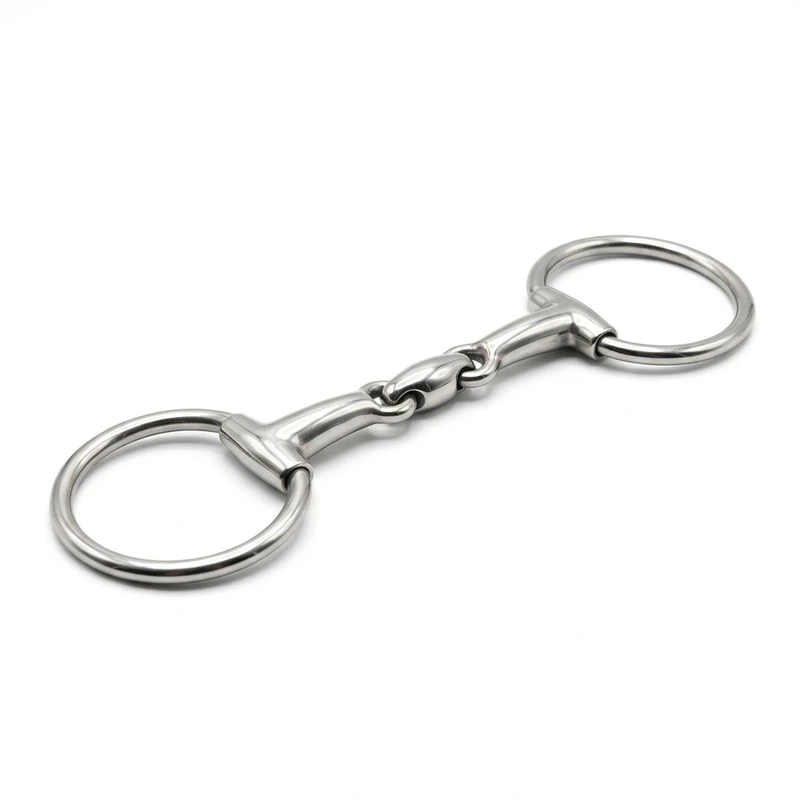
High-copper German Silver and Argentan
“German Silver” is a trade name for nickel silver and contains no elemental silver. A commonly used high-copper Argentan composition is approximately 60% copper, 20% nickel, and 20% zinc by mass. The exact chemistry must be fixed in the purchase order because nickel-silver grades vary, often within approximate ranges of 55% to 65% copper, 10% to 25% nickel, and 15% to 25% zinc.
For bit rings, cheekpieces, buckles, decorative fittings, and selected saddle hardware, specify:
- Alloy designation or controlled chemistry, with a mill or laboratory report for copper, nickel, zinc, lead, cadmium, and other restricted elements.
- Finished-section dimensional tolerance, typically ±0.20 mm for machined or formed hardware unless a tighter drawing tolerance is required.
- Surface condition: uniformly polished, free from pits, laminations, sharp burrs, cracks, and visible die seams at horse-contact or leather-contact areas.
- Nickel content disclosure and any applicable destination-market chemical restrictions, particularly where prolonged skin or mucosal contact is possible.
- Bit mouthpiece geometry, ring diameter, thickness, joint configuration, and transition radius, with each dimension defined on a drawing.
Bit design must be reviewed against current FEI discipline rules and the rules of the national governing body or competition series in the destination market. A material declaration alone does not establish that a bit is permitted. Mouthpiece thickness, port dimensions, cheekpiece configuration, curb-chain arrangements, and noseband construction can be rule-sensitive.
AISI 420 stainless steel
AISI 420 is a martensitic stainless steel suitable for many equine dental instrument components, farrier-tool fittings, buckles, rasps, and corrosion-resistant hardware where its hardness and polishability are advantageous. A typical chemistry range is approximately 0.15% minimum carbon, 12% to 14% chromium, with manganese and silicon generally controlled around 1.00% maximum each, phosphorus and sulfur commonly limited to approximately 0.040% maximum each, and balance iron. The exact grade and certificate must be stated because regional equivalents may differ.
Heat treatment affects the final performance. Depending on the product, a practical hardness target may fall around 44 to 52 HRC after hardening and tempering. Excessive hardness can make thin components brittle; insufficient hardness can produce premature edge wear or deformation. For equine dental instruments, the working profile, smoothness, corrosion resistance, handle security, and cleaning compatibility must be validated together.
Chrome Vanadium drop-forged tools
Chrome Vanadium steel is appropriate for high-load farrier and hoof-care tools when the design benefits from drop forging. A common Cr-V chemistry family contains approximately 0.40% to 0.50% carbon, 0.80% to 1.10% chromium, and 0.15% to 0.30% vanadium, with manganese and silicon controlled according to the selected grade. The exact grade must be confirmed by a material certificate rather than inferred from the product name.
Drop forging refines the grain flow and improves resistance to impact loading compared with an equivalent simple cast shape. The finished tool should still be checked for die mismatch, laps, forging cracks, decarburised edges, handle alignment, jaw symmetry, and heat-treatment consistency. A project hardness range of approximately 38 to 48 HRC is often suitable for general farrier tools, while cutting edges may require a locally controlled higher hardness. The final value depends on tool geometry and the intended hoof-care operation.
4. Technical Comparison of Common OEM Material and Shipping Options
| Product or process | Preferred specification | Typical tolerance or test target | Primary QC risk | Recommended buyer evidence | Commercial application |
|---|---|---|---|---|---|
| Vegetal drum-dyed Argentine cowhide | Full-grain; 1.8 to 3.5 mm according to component; drum dyed and fatliquored | Thickness ±0.15 mm; pH 3.5 to 5.5; moisture 12% to 18%; structural tensile target at least 15 MPa | Weak belly cuts, excessive dryness, uneven colour, grain cracking | Tannery declaration, lot test report, hide grading record, approved colour and hand-feel sample | Bridles, reins, breastplates, martingales, saddle straps |
| High-copper German Silver or Argentan | Approximately Cu 60%, Ni 20%, Zn 20%; polished or controlled satin finish | Chemistry by XRF or laboratory analysis; finished dimensions commonly ±0.20 mm | Uncontrolled alloy variation, burrs, die seams, nickel disclosure gaps | Alloy report, surface inspection, dimensional report, horse-contact edge approval | Bit rings, cheekpieces, buckles, decorative hardware |
| AISI 420 stainless steel | Approximately 12% to 14% chromium with controlled carbon; hardened and tempered as specified | Typical project hardness 44 to 52 HRC; no pitting, cracks, or sharp burrs | Wrong grade, uneven heat treatment, staining after cleaning, brittle thin sections | Material certificate, hardness map, corrosion or cleaning-cycle test, dimensional report | Equine dental instruments, buckles, selected farrier components |
| Chrome Vanadium drop-forged tool steel | Typical Cr 0.80% to 1.10%, V 0.15% to 0.30%, C 0.40% to 0.50% | General tool target approximately 38 to 48 HRC; jaw alignment and edge geometry per drawing | Forging laps, decarburisation, misalignment, uncontrolled hardness | Heat-treatment record, hardness readings, forging inspection, load or functional test | Hoof nippers, pull-offs, clinchers, pincers, farrier hammers |
| CNC private-label debossing or engraving | Brass, steel, leather, or polymer-compatible die made from vector artwork | Logo position normally ±1.0 mm; repeat depth and orientation checked against golden sample | Over-deep leather impression, distorted small lettering, inconsistent metal mark | Artwork proof, die approval, first-off sample, placement drawing | Branding on leather goods, buckles, tools, cartons, and tags |
| FOB Karachi sea freight | Cartonised and palletised production consolidated for port export | Carton count, gross weight, dimensions, packing list, export documents reconciled before release | Moisture exposure, incorrect document data, port delay, carton compression | Commercial invoice, packing list, certificate of origin where required, inspection report, bill-of-lading data | Containerload and replenishment orders |
| DHL Express air courier | Sample, urgent replenishment, or small commercial shipment with export-ready cartons | Declared value, HS classification, carton dimensions, weight, and consignee data verified before pickup | Higher freight cost, customs delay, dimensional-weight surcharge | Air waybill, commercial invoice, packing list, export declaration where applicable | Prototype approval, urgent samples, low-volume launch stock |
5. Private-Label Stamping and CNC Brand Debossing
Artwork and die preparation
Private-label execution begins with a clean vector file, preferably in AI, EPS, SVG, or DXF format. The buyer should provide the exact brand spelling, registered symbol requirements, minimum line width, preferred logo size, orientation, and position from the nearest edge, stitch line, buckle, or hole.
For leather debossing, the die material, heating method, pressure, dwell time, and leather moisture condition affect the result. Fine lettering may close up in dense leather if the die relief is too deep. A practical first specification may use a relief depth of approximately 0.5 to 1.2 mm, followed by approval of the physical sample. The final depth should be selected against leather temper, finish, grain character, and logo detail rather than applied as a universal value.
For metal components, CNC engraving, laser marking, or engraved stamping may be selected according to alloy, surface finish, batch quantity, and required permanence. The buyer should specify whether the mark must remain visible after polishing, oiling, cleaning, or normal leather-contact wear.
Approval protocol
- Submit vector artwork and a placement drawing.
- Confirm logo dimensions, die material, marking method, and estimated die charge.
- Produce a die proof or digital layout for commercial approval.
- Manufacture a physical branded sample using production-intent leather or metal.
- Approve the first-off sample for impression depth, alignment, colour, orientation, and legibility.
- Retain the approved sample as the golden sample for production inspection.
Prototype development is normally planned for 10 to 14 days after receipt of complete artwork, technical dimensions, material decisions, and any required deposit. This period may extend where the design requires a new mould, custom bit geometry, forging die, saddle tree change, or laboratory material testing.
6. MOQ Tiers for Mixed Containerload Orders
MOQ should be discussed at three levels: minimum per SKU, minimum per colour or size, and minimum total order value or shipment volume. A mixed containerload can combine approved product families, but it cannot eliminate the setup cost of a new die, mould, heat-treatment batch, leather colour, or packaging artwork.
| Order tier | Indicative structure | Suitable buyer | Private-label conditions | Planning consideration |
|---|---|---|---|---|
| Prototype and pre-production | 1 to 5 units per design or size family | Brand validation, fit trial, retailer approval | Sample marking or one-off die proof; not representative of production pricing | 10 to 14 day prototype target, excluding complex tooling and courier transit |
| Small commercial launch | Approximately 25 to 100 units per SKU, subject to product type | Specialist tack shop or new private label | Logo stamping generally possible; custom packaging may require a higher carton quantity | Higher unit cost and possible colour or size consolidation |
| Mixed wholesale order | Approximately 100 to 500 total units across approved SKUs | Regional distributors and online retailers | Shared packaging formats and consolidated artwork reduce setup cost | MOQ per leather colour, metal finish, and size must be confirmed separately |
| Mixed containerload | Multiple product families consolidated toward one sea shipment | Established distributors and national retailers | Dedicated branding, cartons, inserts, and production scheduling available | Container utilisation depends on carton cube, not only unit count |
| Full OEM programme | Buyer-specific tooling, packaging, and rolling replenishment schedule | Large tack brands and veterinary supply distributors | Dedicated dies, retained golden samples, forecast-based capacity planning | Tooling ownership, exclusivity, forecast accuracy, and replacement policy must be written |
These are planning bands rather than fixed promises. Actual MOQ depends on whether the order contains leather colours, multiple sizes, Argentan or stainless-steel finishes, heat-treated tools, custom cartons, or equine dental instrument configurations. The quotation should separate product MOQ, colour MOQ, packaging MOQ, tooling charges, and shipment minimums.
7. Manufacturing, Quality Control, and Inspection Checkpoints in Sialkot
Incoming material inspection
- Record hide thickness at multiple points, not only at the perimeter.
- Grade leather for grain damage, loose fibres, scars, belly stretch, colour variation, and excessive surface correction.
- Verify metal alloy with supplier documentation and, where specified, handheld XRF or laboratory analysis.
- Check stainless-steel and Cr-V heat-treatment batches for hardness against the approved range.
- Confirm thread, lining, padding, rivets, buckles, rings, and fasteners against the approved bill of materials.
Cutting and assembly inspection
- Verify strap width, hole diameter, hole pitch, edge radius, skiving length, and component orientation.
- Check symmetry between left and right bridle, breastplate, martingale, or saddle components.
- Inspect stitch density, seam alignment, back-tacking, thread tension, and reinforcement patches.
- Confirm that buckle tongues, rings, bit cheeks, and adjustment hardware move freely without sharp edges.
- Inspect horse-contact surfaces for burrs, exposed rivets, abrupt edges, loose fibres, and finish defects.
- Check bit mouthpiece joint movement and surface polish against the approved drawing and sample.
Functional and durability verification
Load-bearing leather assemblies should be checked through controlled static or cyclic testing appropriate to their design. The buyer should state whether the requirement applies to the leather, stitching, buckle, rivet, or complete assembly. A test load should never be selected generically for every product; reins, girths, breastplates, stirrup leathers, and decorative straps have different load paths and safety implications.
Farrier tools should undergo jaw alignment, pivot movement, cutting-edge geometry, handle security, and functional operation checks. Cr-V tools should be inspected for forging laps and heat-treatment defects before surface coating or polishing. Equine dental instruments should be checked for dimensional repeatability, smooth working surfaces, secure handle attachment, corrosion resistance under the agreed cleaning cycle, and correct identification or batch marking.
For leather, use agreed rub, flex, tear, tensile, colour, and moisture tests. For metal, use alloy verification, hardness, dimensional inspection, surface inspection, and corrosion or cleaning-cycle testing where applicable. Inspection results should be recorded by lot and linked to the packing list or production batch.
Pre-shipment inspection
A pre-shipment inspection should compare the finished order with the approved golden sample, technical drawing, carton specification, and packing list. The report should identify inspected quantity, sample size, critical defects, major defects, minor defects, measurements, photographs, carton numbers, and final disposition.
For regulated or rule-sensitive products, the buyer remains responsible for confirming destination-market requirements. FEI regulations and national rules can change by discipline and revision. British Equestrian requirements may apply to competition equipment in Great Britain, while VG1 01.040 is a safety standard associated with riding helmets, not a general approval standard for bits, bridles, saddles, or farrier tools. It must not be used to describe non-helmet tack as VG1 compliant.
8. VCI Moisture-Barrier Export Packing
Sea transport from Karachi exposes cartons to changing temperature and humidity. VCI, or volatile corrosion inhibitor, packing is appropriate for ferrous or susceptible metal components when the material is compatible with the product finish. It is not a substitute for dry products, sealed cartons, correct desiccant quantity, or proper container loading.
A robust export-packing specification may include:
- Clean and completely dry metal surfaces before wrapping.
- VCI paper, film, or bags selected for the metal family and product geometry.
- Desiccant sachets sized to carton volume and humidity exposure, kept separate from direct horse-contact surfaces.
- Polybagging or sealed inner packaging where leather and polished metal must be separated.
- Double-wall export cartons with internal dividers for bits, buckles, dental instruments, or sharp-edged tools.
- Moisture indicator cards in higher-value cartons or consolidated cases.
- Pallet stretch film, corner protection, carton strapping, and pallet treatment complying with destination-country requirements.
- Clear carton numbering that matches the packing list, SKU, size, colour, and production lot.
Leather should not be sealed in non-breathable plastic while still carrying elevated moisture. Prolonged condensation can produce staining, finish transfer, odour, or mould. Leather and metal should be separated where the metal finish, oil, VCI chemistry, or residual moisture could mark the hide.
9. FOB Karachi versus DHL Express Air Courier
FOB Karachi
FOB Karachi is generally suitable for commercial wholesale quantities and containerload consolidation. Under a correctly documented FOB arrangement, the seller delivers the goods cleared for export and loaded onto the buyer-nominated vessel at the named port, while the buyer manages the main ocean freight, insurance after the agreed transfer point, import clearance, duties, and inland delivery. The exact Incoterms version and named place should appear on the quotation and commercial invoice.
Before accepting FOB pricing, confirm whether the quotation includes export cartons, inland transport to Karachi, terminal handling, export documentation, palletisation, and any port-related charges. The buyer should also confirm whether the goods are loose-loaded, palletised, or containerised and who controls the booking.
DHL Express air courier
DHL Express is practical for prototype samples, urgent replacement quantities, pre-launch inspection units, and low-volume commercial shipments. The quotation should state actual weight, dimensional weight, carton dimensions, declared value, HS classification, consignee tax number where required, and whether duties and taxes are billed to the shipper or receiver.
Air courier is rarely the lowest-cost route for saddles, large leather assemblies, or dense tool cartons. It is valuable when the cost of delay exceeds the freight premium. All samples sent by courier should be marked with accurate commercial descriptions and values; vague descriptions can create customs delays or incorrect duty assessment.
10. Secure Trade Finance and Payment Terms
Payment terms should protect both the buyer’s working capital and the manufacturer’s material commitment. A commonly negotiated structure is a deposit at order confirmation, a balance after production completion and satisfactory pre-shipment inspection, and release against agreed documents. The percentage should reflect tooling cost, material intensity, order size, and the relationship history.
For larger or first-time transactions, consider:
- Documentary letter of credit: useful where the bank, shipment documents, inspection conditions, and expiry dates are clearly defined.
- Irrevocable letter of credit at sight: provides payment control against compliant documents but requires precise document wording.
- Bank transfer with inspection holdback: a deposit followed by balance release after approved inspection photographs, reports, and packing-list reconciliation.
- Escrow or structured trade platform: suitable where both parties accept the platform’s dispute and release procedures.
- Tooling ownership schedule: states who owns CNC dies, forging dies, moulds, and artwork files after payment.
- Currency and bank-charge clause: identifies quotation currency, intermediary-bank charges, exchange-rate exposure, and the account beneficiary matching the contracted entity.
Do not release the balance solely on a photograph of packed cartons. Tie payment to measurable conditions: approved golden sample, inspection report, correct quantity, correct carton count, completed export documents, and agreed defect disposition. Any permitted tolerance, rework method, replacement obligation, and credit note procedure should be written into the purchase order.
11. Buyer RFQ and Ordering Checklist
Product and fit parameters
- Product name, intended equestrian discipline, horse size range, and target end user.
- Full dimensional drawing, including strap width, thickness, hole pitch, ring diameter, bit mouthpiece thickness, port height, and adjustment range where relevant.
- Leather type, hide origin, tanning route, thickness, colour, finish, lining, padding, and acceptable natural marks.
- Metal grade, alloy chemistry, hardness range, finish, plating or polishing requirement, and corrosion-test expectation.
- Stitching specification, thread material, thread size, stitch count, seam allowance, and reinforcement method.
- Bit, noseband, bridle, saddle, or instrument design details that may be subject to FEI, British Equestrian, national, or retailer rules.
Branding and packaging parameters
- Vector logo file, logo dimensions, placement, orientation, impression or engraving method, and colour requirement.
- Whether the buyer requires a new CNC debossing die, engraving tool, forging die, mould, or packaging plate.
- Retail carton dimensions, barcode format, SKU label, country-of-origin marking, care card, instruction sheet, and language requirements.
- Inner packaging, VCI film or paper, desiccant, moisture indicator, carton strength, pallet specification, and carton numbering.
- Required golden sample retention period and approval authority.
Commercial and logistics parameters
- Quantity per SKU, size, colour, finish, carton, and shipment tier.
- Required prototype quantity and 10 to 14 day sample-development target.
- Preferred Incoterm, named place, destination port or airport, and courier account details if applicable.
- HS-code responsibility, commercial invoice data, certificate-of-origin requirement, and import documentation.
- Inspection standard, inspection company if nominated, acceptable quality limit, and treatment of critical, major, and minor defects.
- Payment currency, deposit, balance trigger, bank details, letter-of-credit conditions, and tooling-payment terms.
- Forecast quantities, replenishment timing, exclusivity requirements, and annual price-review mechanism.
12. Recommended Sourcing Sequence
- Send a complete RFQ with drawings, photographs, measurements, target quantities, material requirements, and destination market.
- Receive a quotation separating product price, tooling, samples, packaging, inspection, freight, and payment terms.
- Review leather and metal evidence, including tannery information, alloy reports, hardness data, and restricted-substance declarations.
- Approve the technical drawing, bill of materials, artwork, packaging layout, and prototype schedule.
- Receive and test the prototype within the intended equine-use environment, including fit, adjustment, surface smoothness, balance, and cleaning requirements.
- Issue written golden-sample approval with any controlled deviations.
- Place the production order with batch, inspection, packing, and shipping conditions included.
- Complete incoming, in-process, final, and pre-shipment inspection before balance payment and dispatch.
- Retain the production file for future replenishment, including lot numbers, test reports, approved samples, photographs, and corrective actions.
13. Work with Equestrian Max
Wholesale buyers can begin by reviewing the Equestrian Max product catalogue and selecting the relevant English saddlery, bits and bridles, farrier tools, or equine dental instruments category.
For private-label pricing, material certification, prototype planning, mixed-SKU MOQ assessment, CNC branding, export packing, or shipment terms from Sialkot, submit the technical requirements through the Equestrian Max contact page. A precise RFQ allows the factory team to quote the correct construction rather than an unverified generic equivalent.
Related Categories & Sourcing Hubs
Hamza Tariq
Chrome-Vanadium Farrier Tooling & Hoof Nipper Forging Lead
Reviewed against FEI tack regulations, high-copper German Silver bit metallurgy, Chrome-Vanadium farrier forging, and equine dental standards.

